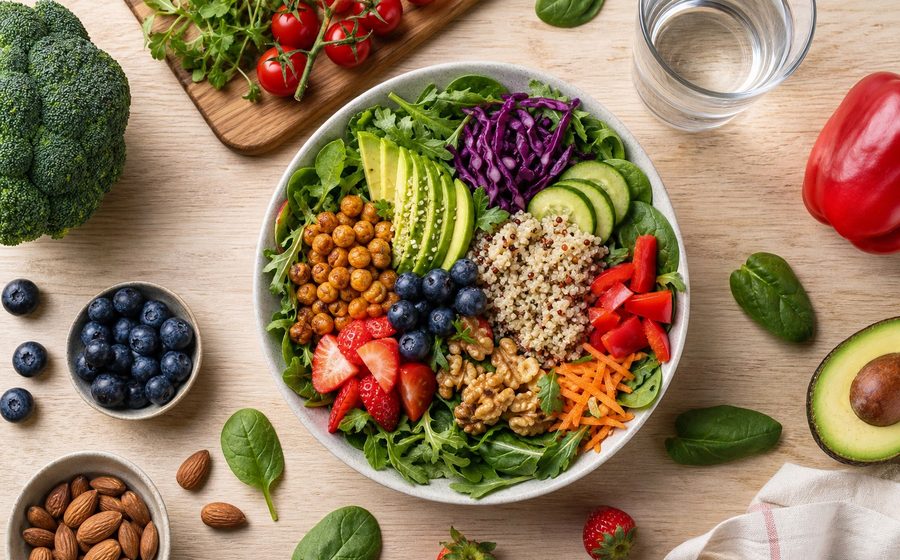
Seasonal eating is not a diet, and it is not a test of willpower. It is simply a friendlier way to plan meals — one that tends to taste better, cost less and give your body what it needs without a spreadsheet.
What seasonal eating actually means
Eating seasonally means building meals around produce that is at its natural best right now. That might be crisp greens and berries in warmer months, or squash, root vegetables and citrus when the weather turns. Nothing exotic, nothing expensive — just produce that has had less distance to travel and more time to ripen properly.
Why it tends to taste better
Flavour and nutrition develop in the final stretch of ripening. Produce picked early so it can survive a long journey simply does not taste the way a locally grown, in-season version does.
When vegetables taste this good, cooking becomes easier. You need fewer tricks — a little olive oil, lemon, herbs and heat — because the ingredient is already doing the work.
Kind to your budget and your kitchen
In-season produce is usually plentiful, which makes it cheaper. It also keeps longer when it arrives fresh, so fewer things wilt quietly at the back of the fridge. Planning around what is abundant is one of the simplest ways to reduce both waste and grocery spend.
A simple way to plan a week
You do not need a complicated system. Build each meal from the same comfortable structure and let the seasons fill in the details.
- A base. Whole grains, beans, lentils, potatoes or noodles.
- A colour. Whatever vegetables are at their best — roasted, steamed, raw or stirred through.
- A protein. Fish, eggs, chicken, tofu, yoghurt, beans or lentils.
- Something fresh. Herbs, lemon, a crunchy salad, a spoon of yoghurt.
- Something warm. A dressing, a spice, a soup on the side — comfort matters for habits.
Good nutrition is not about eating perfectly. It is about making the nourishing choice the easy choice most of the time.
Seasonal swaps worth trying
- Heavy stews to lighter bowls. As the weather warms, move from slow-cooked dishes to grain bowls, grilled vegetables and fresh herbs.
- Root vegetables to tender greens. Roast squash and carrots give way to asparagus, beans and leafy greens.
- Warm oats to overnight oats. Same fibre and comfort, less time standing at the stove.
- Baked fruit to fresh fruit. Stewed apples and pears make way for berries and stone fruit when they arrive.
Do not forget hydration and fibre
Two quiet essentials sit underneath every healthy pattern. Fibre — from vegetables, fruit, beans, nuts and whole grains — keeps digestion steady and helps you feel satisfied after meals rather than hunting for something else.
Water matters just as much. Thirst is easily mistaken for hunger, and mild dehydration shows up as fatigue or a headache long before anything dramatic. Keep a bottle where you can see it and sip through the day rather than catching up all at once.
Making it stick in real life
Plans collapse when they demand time you do not have. So be honest about your week. If evenings are busy, do the chopping earlier. If lunches are eaten at a desk, keep something satisfying within reach. Cook once and let it serve twice.
Allow for the days that go wrong. One takeaway does not undo a week of good meals, and nobody benefits from a guilt spiral. The next meal is always a fresh start.
A note on supplements
Food first, always. Most people get what they need from a varied diet, and unnecessary supplements can be expensive or interact with medication. If you are considering one, bring it to your clinician or dietitian first so it can be matched to your actual needs.
Key takeaways
- Build meals around produce that is at its best right now — it tastes better and costs less.
- A repeatable meal structure beats a complicated meal plan.
- Fibre and water quietly do more for you than most supplements ever will.
- Consistency over perfection is what changes how you feel.
If you would like guidance shaped around your own health, kitchen and schedule, our wellness and nutrition team can build a plan with you — one that survives real weeks.